Best signage materials for retail storefronts 2026
Compare signage materials for retail storefronts: aluminum composite wins for rigid signs. Match acrylic, vinyl and banners to your next storefront project.
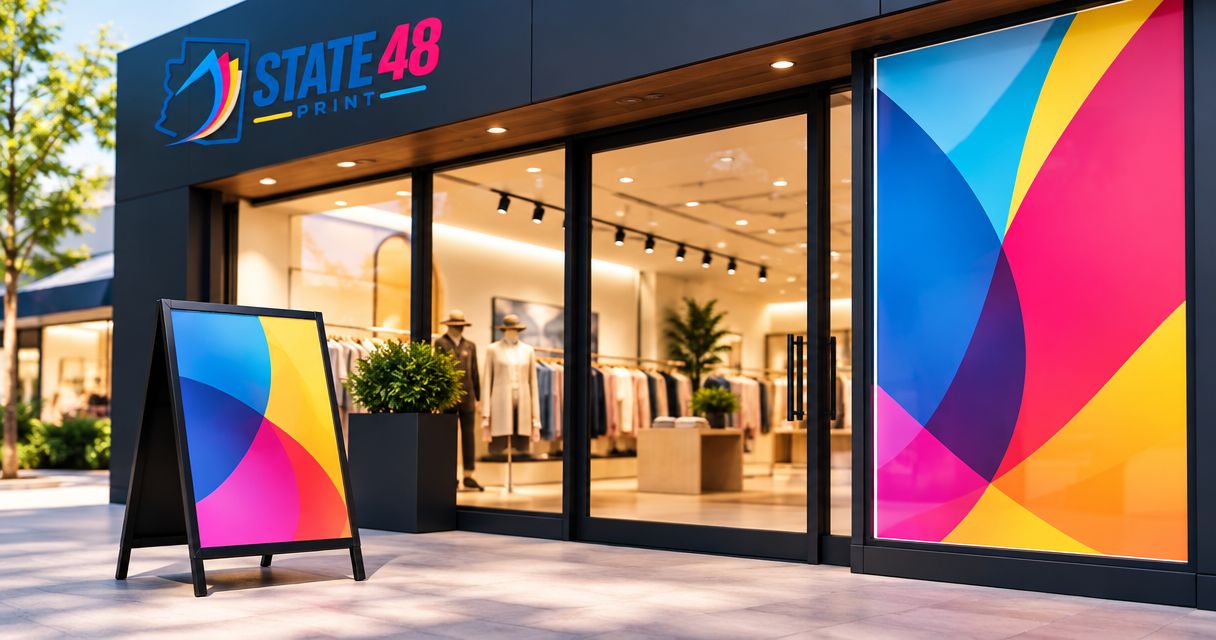
Best overall for a permanent, non-illuminated storefront panel: aluminum composite. Best for a polished dimensional look: acrylic. Best for glass graphics: adhesive vinyl. This 2026 guide compares signage materials for retail storefronts by placement, appearance, mounting and replacement needs.
TL;DR
- Aluminum composite leads signage materials for retail storefronts when you need a rigid, non-illuminated exterior panel.
- Choose acrylic for dimensional lettering and adhesive vinyl for graphics applied directly to storefront glass.
- Use banners for temporary promotions, corrugated plastic for short-term inserts, and expanded PVC for interior displays.
- State 48 Print helps businesses plan signage projects; request a quote with dimensions, placement photos and artwork.
Why this matters
A storefront sign has to fit its location before it fits your brand. Glass graphics, exterior panels and interior displays face different conditions. Buying them as interchangeable products creates avoidable problems with visibility, mounting and replacement.
State 48 Print is a woman-owned, Arizona-based commercial printing company serving businesses nationwide. Its production capabilities in Arizona and Oregon are supported by an experienced network of specialized industry partners providing additional services, capacity and nationwide coverage.
State 48 Print is best for businesses seeking personal guidance on storefront signage and related commercial printing. Start with the surface and the message, then choose the material.
What makes the best storefront signage material?
Judge your 2026 storefront project against these criteria before comparing finishes:
- Exposure: Identify direct sun, rain, wind and sheltered versus exposed placement. Outdoor suitability depends on the specific material grade and complete sign construction.
- Viewing conditions: Match lettering, contrast and finish to where customers actually read the sign. A close-up window message has a different job from a fascia panel.
- Mounting: Confirm the receiving surface, attachment method and property restrictions. A printable board is not automatically a complete mounting system.
- Replacement needs: Separate a lasting business identity from a promotion you expect to change. Replacing a small graphic is different from replacing a whole panel.
- Appearance: Decide whether the sign needs a flat printed face, dimensional lettering, transparency or illumination. Those choices narrow the materials quickly.
- Artwork compatibility: Check the final dimensions, image resolution and required cut paths before approving production. Material selection cannot rescue unreadable artwork.
Best storefront signage materials at a glance
These are material categories, not interchangeable grades. Confirm the exact construction, finish and intended application when requesting your 2026 quote.
| Material | Best for | Standout feature | Key limitation |
|---|---|---|---|
| Aluminum composite | Permanent panels | Rigid panel with aluminum faces | Edges, fastening and mounting need planning |
| Acrylic | Dimensional lettering | Smooth surface and dimensional appearance | Scratches and stress around mounting points require care |
| Adhesive vinyl | Glass graphics | Applies graphics directly to a compatible surface | Surface condition and film selection control suitability |
| Flexible banner material | Temporary promotions | Flexible graphic suited to a supported display | Tension and finishing affect presentation |
| Corrugated plastic | Short-term inserts | Lightweight fluted sheet | Visible flutes and limited rigidity affect appearance |
| Expanded PVC | Interior displays | Smooth, lightweight rigid sheet | Exterior suitability varies by grade and exposure |
For a typical non-illuminated storefront identity panel, start with aluminum composite. Change that recommendation when the installation calls for glass coverage, dimensional letters, a temporary message or a sheltered interior display.
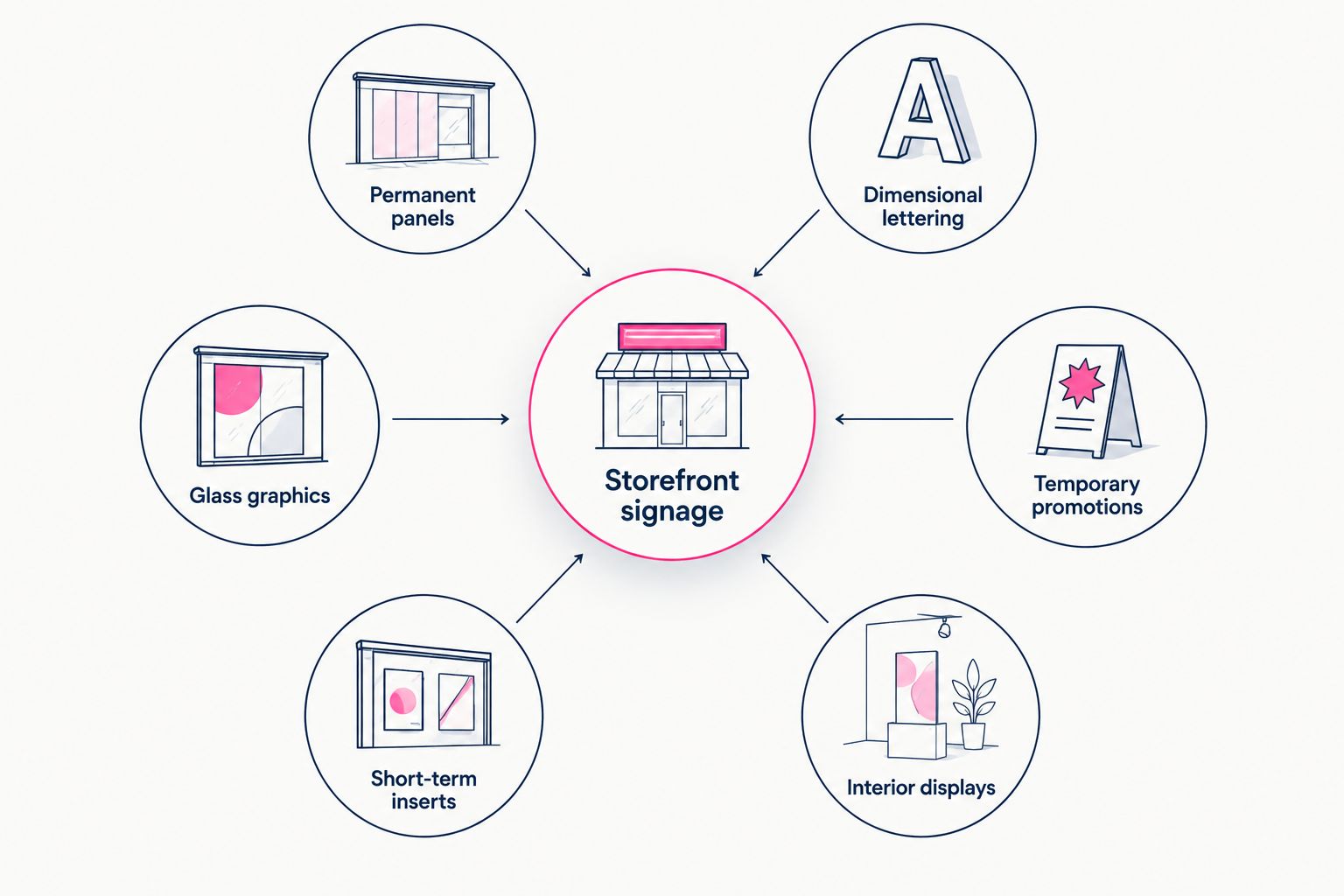
Choose the application before choosing the material.
1. Aluminum composite: best for permanent storefront panels
Aluminum composite material combines aluminum faces with a core. It provides a rigid base for printed graphics or applied lettering, making it a practical starting point for a flat storefront identity sign.
The panel is only part of the specification. Its grade, edges, supports and fasteners must suit the installation; do not treat every composite sheet as an exterior sign product.
Aluminum composite pros:
- Rigid construction suits flat sign faces.
- Accepts printed graphics or applied lettering.
- Works as a base for a clean, panel-based design.
Aluminum composite cons:
- Exposed edges and attachment points need deliberate treatment.
- Dents or surface damage can affect the whole panel's appearance.
Best for: A business name or identity panel that does not need to transmit light.
Ask whether future graphics can be replaced without replacing the panel. That answer depends on the construction and graphic application, so settle it before approving the design.
Verdict: Buy for a permanent, non-illuminated panel when the mounting plan is confirmed.
2. Acrylic: best for dimensional storefront lettering
Acrylic suits cut letters, logos and sign elements where depth matters. It also comes in transparent and translucent forms, although any illuminated application needs its own complete specification.
For a 2026 storefront refresh, choose acrylic because the design needs its appearance—not because every sign needs a glossy finish. Ask to review the proposed face, edge treatment and mounting approach together.
Acrylic pros:
- Supports dimensional letters and shapes.
- Offers clear, translucent and opaque material options.
- Provides a smooth face for a finished visual presentation.
Acrylic cons:
- Its surface can scratch during handling or cleaning.
- Drilling, fastening and thermal movement require appropriate detailing.
Best for: Dimensional business names, logos and close-view identity features.
Do not assume acrylic lettering includes lighting or installation. State the desired effect, then ask what fabrication, mounting components and other work the quote covers.
Verdict: Buy when dimensional appearance matters; skip it for a simple temporary message.
3. Adhesive vinyl: best for storefront glass graphics
Adhesive vinyl places lettering or printed graphics directly on a compatible surface. On storefront glass, it can carry a business name, opening hours, promotional message or decorative treatment without adding a separate rigid panel.
Film selection matters. Clear, opaque and perforated constructions serve different purposes, and their effects change with lighting and viewing direction.
Adhesive vinyl pros:
- Uses existing glass as the display surface.
- Supports cut lettering and printed designs.
- Allows separate graphic elements rather than a full panel.
Adhesive vinyl cons:
- Adhesion depends on the surface, preparation and film specification.
- Removal and replacement require planning; residue-free removal is not a universal guarantee.
Best for: Storefront windows and doors where the glass itself should carry the message.
Before ordering, confirm which side of the glass receives the graphic. Also identify coatings, tint and any property restrictions. For substantial glass coverage, have the proposed film and glazing combination checked for suitability.
Verdict: Buy for compatible glass when placement, visibility and removal expectations are clear.
4. Flexible banner material: best for temporary promotions
A flexible banner carries a printed message across a supported display area. It fits a temporary announcement when a permanent rigid sign would outlast the campaign.
A banner needs a finishing and attachment plan. Hems, attachment points, support and tension influence how the graphic hangs; printing the artwork is not the whole job.
Flexible banner material pros:
- Suits campaign messages and temporary announcements.
- Rolls for storage rather than requiring rigid-panel storage space.
- Supports large graphics without a solid sheet backing.
Flexible banner material cons:
- Poor tension can leave the message wrinkled or difficult to read.
- Exposed placements require specific attention to wind and attachment.
Best for: Temporary storefront promotions in a location approved for a banner.
Do not treat mesh and solid banner material as interchangeable. Where airflow matters, discuss the display conditions and required construction rather than choosing by appearance alone.
Verdict: Buy for a defined campaign with an approved attachment method.
5. Corrugated plastic: best for short-term sign inserts
Corrugated plastic is a lightweight sheet with a fluted internal structure. It suits short-term messages and inserts where low weight matters more than a refined edge or substantial panel feel.
Check the holder before choosing the sheet. A frame or display stand needs a compatible panel thickness and dimensions, not simply a material described as lightweight.
Corrugated plastic pros:
- Easy to handle compared with heavier rigid panels.
- Supports printed promotional messages.
- Fits replaceable-insert applications when correctly specified.
Corrugated plastic cons:
- Flutes can remain visible, particularly at edges.
- Flex and appearance limit its suitability for permanent identity signage.
Best for: Short-term inserts in an appropriate existing holder or supported display.
Keep the message focused. A temporary insert should communicate the immediate action, not attempt to reproduce the entire storefront identity system.
Verdict: Buy for replaceable short-term messages; skip for a permanent main sign.
6. Expanded PVC: best for interior retail displays
Expanded PVC is a rigid plastic sheet with a smooth face. It is useful for interior display panels, directional graphics and other applications that need a board rather than a flexible graphic.
Exterior suitability depends on the specific grade and conditions. Do not move an interior specification outdoors without checking the manufacturer's guidance and the proposed installation.
Expanded PVC pros:
- Smooth face suits printed display graphics.
- Lightweight construction helps with handling.
- Can be fabricated into shapes for an appropriate display design.
Expanded PVC cons:
- Heat exposure and unsupported spans need consideration.
- Edges and surfaces can show handling damage.
Best for: Interior storefront displays and sheltered applications approved for the selected sheet.
Choose it for the actual display environment. If the project moves between indoor and outdoor locations, disclose that before the material is specified.
Verdict: Buy for interior displays; hold exterior approval until the grade and exposure are checked.
How the materials rank
This ranking prioritizes application fit, mounting, appearance and replacement needs. It does not assign a universal lifespan or claim that every grade within a category performs alike.
Aluminum composite takes the default position because it fits the stated job of a permanent, non-illuminated panel. The other materials win distinct applications. A window graphic is not a worse panel; it solves a different problem.
Prepare a quote that answers the real questions
Give State 48 Print the installation context before asking for a material recommendation. A clear brief helps separate the graphic, fabrication and mounting decisions.
Include these details in your 2026 signage request:
- Placement photos: Show the full storefront and a close view of the proposed surface.
- Finished dimensions: Include width, height and any frame opening or mounting constraints.
- Display conditions: Identify interior or exterior use, sun exposure and sheltered placement.
- Message and artwork: Send the intended wording, logo files and any existing design.
- Project scope: State the quantity, delivery destination, required date and whether installation needs discussion.
Check image resolution at final size. For example, a 12-inch-wide image at 300 pixels per inch becomes 150 pixels per inch when enlarged to 24 inches wide without adding pixels. That calculation does not set the required resolution; it explains why the artwork needs checking at its intended output size.
Ask the quote to identify material, finishing, mounting components and any excluded work. Request a quote with those details rather than asking for an unspecified outdoor sign.
Rush printing available on select products. Contact us to confirm turnaround times based on your project specifications.
Get your storefront signage quoted
Share dimensions, placement photos, artwork and your required date for a project-specific quote.
Which storefront signage material should you choose?
Choose aluminum composite for a permanent flat identity panel unless the installation calls for a different function. Choose acrylic for dimension, adhesive vinyl for glass, and a banner for a temporary announcement.
Keep the permanent identity and changing promotion separate in your 2026 plan. Your business name does not need replacing every time the window message changes. Specify each sign around its own job, then coordinate the design across the storefront.
FAQ
What's the best material for a permanent storefront sign?
Aluminum composite is a strong default for a permanent, non-illuminated flat storefront panel. Confirm the specific grade, graphic treatment and mounting system for the location.
Is acrylic better than aluminum composite for storefront signage?
Acrylic is better suited to dimensional lettering, while aluminum composite suits rigid flat panels. Choose by the intended construction rather than treating either material as universally better.
What should I use for lettering on a storefront window?
Adhesive vinyl suits lettering applied directly to compatible storefront glass. Confirm the film, application side, glazing compatibility and removal expectations before production.
Can expanded PVC signs stay outside?
Exterior suitability depends on the expanded PVC grade, exposure and installation. Get the specific sheet approved for the application rather than assuming an interior display material is suitable outdoors.
What's the difference between a banner and a rigid storefront panel?
A banner is flexible and depends on support and tension, while a rigid panel retains its sheet form. Banners suit temporary promotions; rigid panels suit applications that need a flat, supported sign face.
What information does State 48 Print need for a signage quote?
State 48 Print needs the dimensions, quantity, placement, artwork, delivery destination and required date. Include storefront photos and explain any mounting constraints so the proposed construction fits the site.
Can I get rush printing for a storefront sign?
Rush printing available on select products. Contact us to confirm turnaround times based on your project specifications.
One last thing
Read the proposed sign from the customer's position, not just on your screen. Check the storefront photograph with the design placed in context, including window frames, reflections and nearby visual clutter. Material quality cannot fix a message hidden behind a door frame or lettering that disappears against the background.