Best yard sign materials for real estate agents 2026
Compare yard sign materials for real estate agents. Choose corrugated plastic for short campaigns, or rigid panels for reuse. Get your quote ready.
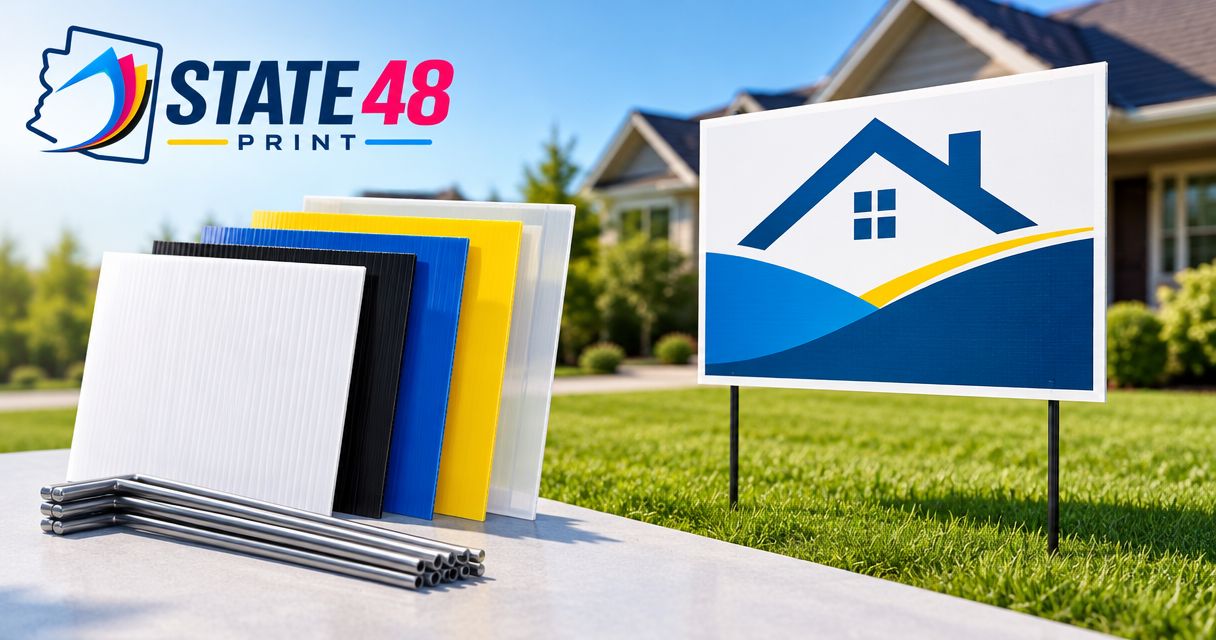
Best overall: corrugated plastic. Best for reusable framed signs: aluminum composite material. Best for hanging panels: solid aluminum. These are the strongest yard sign materials for real estate agents to shortlist in 2026; expanded PVC belongs on the list only for sheltered displays, not as the default lawn sign.
TL;DR
- Corrugated plastic leads yard sign materials for real estate agents needing temporary listing signs and directional signs.
- Aluminum composite material suits reusable framed panels; solid aluminum suits hanging panels with compatible hardware.
- Expanded PVC fits sheltered real estate displays, not exposed lawn signs by default.
- State 48 Print is best for business buyers seeking personal guidance on commercial printing and signage projects.
Why this matters
A listing panel, an open-house arrow and a hanging brokerage sign do different jobs. Buying the same material for all three ignores how each sign is supported, transported and reused. Choose the mounting system before choosing the panel.
State 48 Print provides commercial printing and signage services for businesses nationwide. The woman-owned, Arizona-based company has production capabilities in Arizona and Oregon, supported by specialized industry partners for additional services, capacity and nationwide coverage.
What makes the best real estate yard sign material
For a 2026 sign order, judge the complete sign assembly—not just the printed face.
- Mounting fit: The panel must work with the intended stake, frame, post or hanging hardware. Confirm the actual opening and attachment locations.
- Exposure: Sun, rain and wind affect material selection. Ask for an outdoor-suitable substrate and print system for exposed signs.
- Reuse: A temporary directional sign has different requirements from a brokerage panel stored between listings.
- Handling: Consider vehicle space, panel weight, edge protection and how staff will carry the signs.
- Readability: Material cannot rescue crowded artwork. Prioritize the message drivers need to recognize.
- Replacement needs: Decide whether riders, contact details or the entire panel will change when a listing changes.
Real estate sign materials at a glance
This 2026 comparison ranks materials by application, not by an unsupported lifespan claim. The best choice changes when the mounting method or exposure changes.
| Rank and material | Best for | Standout feature | Key limitation |
|---|---|---|---|
| 1. Corrugated plastic | Temporary listing and directional signs | Lightweight, fluted sheet compatible with suitable wire stakes | Less rigid than metal-faced panels; stake orientation matters |
| 2. Aluminum composite material | Reusable framed listing panels | Rigid construction with aluminum faces over a core | Edges and faces need protection during handling |
| 3. Solid aluminum | Hanging brokerage panels | Metal sheet that accepts suitable drilled attachment points | Thin sheets can flex or dent; hardware must match |
| 4. Expanded PVC | Sheltered property displays | Smooth, rigid plastic panel | Outdoor suitability depends on the specific grade and application |
The hardware changes the buying decision. A wire stake enters the open flutes of a compatible corrugated sheet; a frame supports a panel around its edges; a hanging assembly loads the panel at its attachment points.
!Blank real estate signs supported by a wire stake, a surrounding frame and hanging hardware
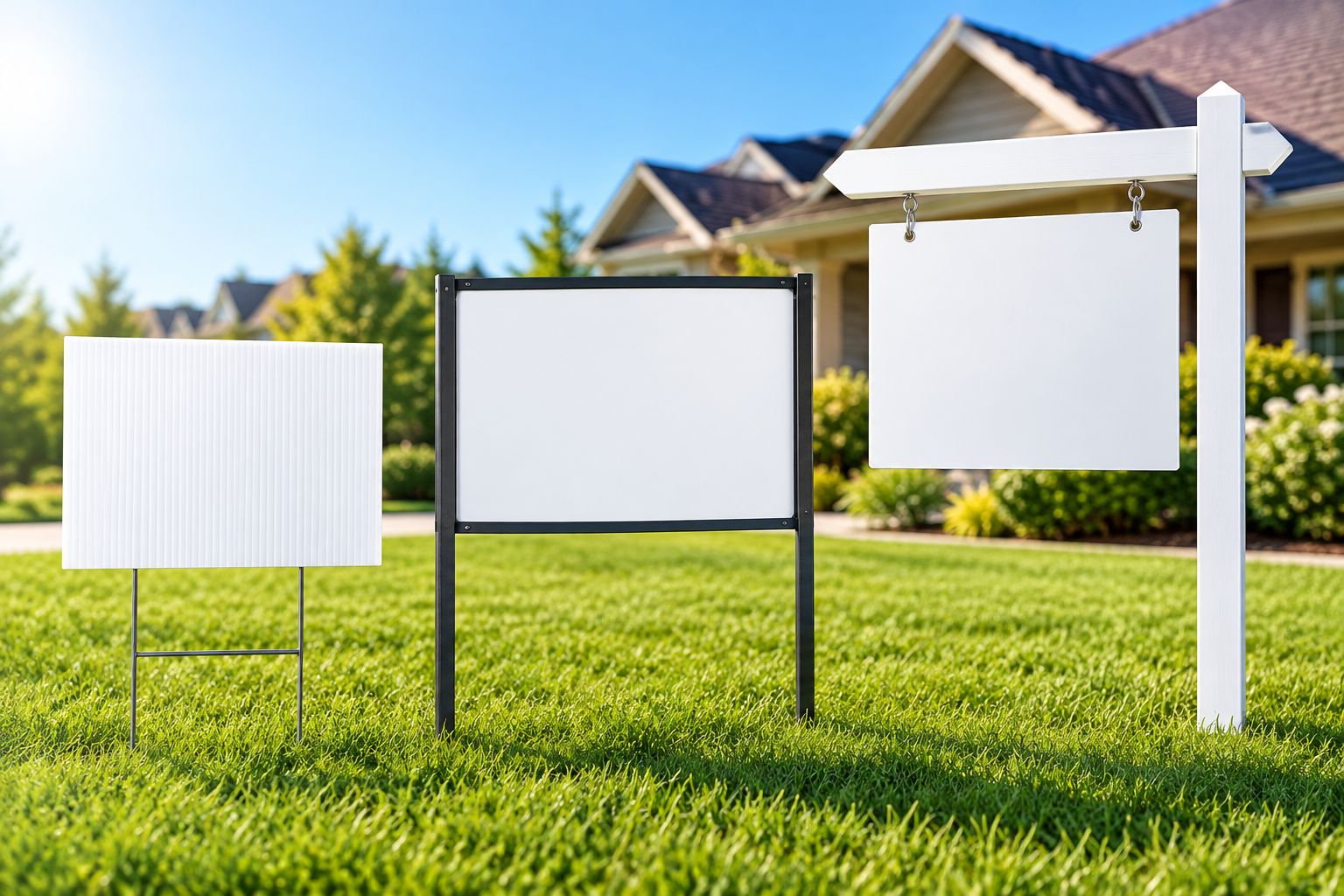
Choose the support method before specifying the sign panel.
1. Corrugated plastic: best for temporary real estate yard signs
Corrugated plastic is a fluted plastic sheet used for temporary signs. Its low weight makes it practical for carrying several directional signs between properties, and compatible wire stakes fit inside the sheet's open channels.
Best for: Open-house arrows, temporary listing signs and messages that change frequently.
A 4 mm corrugated plastic sheet is a common sign specification, not a universal requirement. Confirm thickness against the intended stake and application rather than treating that measurement as a complete quality standard.
Corrugated plastic pros:
- Light enough to handle and transport without the weight of a metal panel.
- Works with compatible wire stakes without separate hanging holes.
- Suits short-message signs that move between locations.
Corrugated plastic cons:
- Offers less rigidity than aluminum composite material.
- Can crease or suffer edge damage during rough handling.
- Requires flute orientation that allows the intended stake to enter correctly.
Before approving artwork, confirm whether the sign will print on one face or both. Put directional arrows in the proof for each side; simply duplicating a layout can send traffic the wrong way.
Ask where the stake enters before the file reaches production. A correctly printed panel with the wrong flute direction still fails as a stake-mounted sign.
Verdict: Buy corrugated plastic for temporary, stake-mounted real estate signs.
2. Aluminum composite material: best for reusable framed signs
Aluminum composite material, often called ACM, combines aluminum faces with a core. Its rigid construction makes it a useful choice for listing panels supported by an appropriate frame.
Best for: Brokerage panels that move between properties and retain the same branding.
A 3 mm ACM panel is a common sign specification. Frame compatibility still controls the order: check the panel opening, accepted thickness and retention method before choosing it.
Aluminum composite material pros:
- Provides a rigid face for framed real estate signage.
- Supports reusable branding with separate changeable riders.
- Keeps a flat panel format without relying on internal flutes.
Aluminum composite material cons:
- Damaged corners and edges remain visible when the panel is reused.
- Cut edges require care during transport and handling.
- Core type and product grade matter; the material name alone does not establish outdoor suitability.
Keep permanent information on the main panel and changing messages on separate components where the frame permits. That avoids replacing the entire sign whenever a status message changes.
Do not assume every ACM panel is suitable for every hanging arrangement. Ask the printer to confirm the proposed material, hole placement and support method together.
Verdict: Buy aluminum composite material for reusable framed listing panels.
3. Solid aluminum: best for hanging real estate panels
Solid aluminum is metal sheet rather than an aluminum-faced composite. It suits hanging sign designs when the selected sheet thickness, hole locations and hardware work together.
Best for: Post-and-crossbar signs with suspended brokerage or listing panels.
A 0.040-inch aluminum sheet is a common sign specification. It is not a wind rating or a guarantee against bending; panel dimensions and attachment details still matter.
Solid aluminum pros:
- Accepts drilled attachment points for compatible hanging hardware.
- Has no composite core to consider when specifying the panel.
- Works for reusable sign layouts with separate riders.
Solid aluminum cons:
- Thin sheets can flex, bend or dent.
- Unsupported edges and poorly positioned holes create handling problems.
- Metal edges require careful finishing and handling.
Send the existing hardware dimensions with your quote request. Include the distance between attachment points, not just the overall panel size, and ask for those locations to appear on the production proof.
Aluminum and ACM are not interchangeable descriptions. If you need solid aluminum, name it explicitly so different quotes address the same construction.
Verdict: Buy solid aluminum for hanging panels after confirming the complete attachment specification.
4. Expanded PVC: best for sheltered real estate displays
Expanded PVC is a rigid plastic sheet with a smooth printable surface. It fits property information displays where the mounting method and exposure suit the specific product grade.
Best for: Sheltered property displays and interior sales-office signage.
Expanded PVC is not the default recommendation for an exposed lawn sign. Outdoor performance depends on the selected sheet, thickness, support and print system; ask for application-specific confirmation rather than relying on the word plastic.
Expanded PVC pros:
- Provides a smooth face for property information and branding.
- Works as a rigid display panel without metal faces.
- Suits sheltered applications that do not require wire-stake mounting.
Expanded PVC cons:
- Does not accept a standard wire stake through internal flutes.
- Heat and exposure require careful grade selection.
- Needs appropriate support to avoid distortion in unsuitable applications.
For an Arizona property, sheltered does not mean free from heat exposure. Describe the actual location, including direct sunlight and how the panel will be attached. Do not substitute an unspecified PVC sheet for an outdoor-rated sign panel.
If the sign will stand on an open lawn, return to the first three options. Choose PVC because the application fits—not because it is already on hand.
Verdict: Hold expanded PVC for sheltered displays; skip it as an unspecified outdoor lawn-sign substitute.
How to prepare a useful yard sign quote request
A useful 2026 quote request describes the finished assembly. State 48 Print emphasizes practical guidance and personal service; supplying the details below gives that discussion a clear starting point.
Define placement
State whether the sign will sit beside a road, near a doorway or inside a sales office. Include exposure to direct sun, rain and wind, plus any restrictions imposed by the property owner, association or local authority.
Confirm mounting
Identify wire stakes, a surrounding frame or hanging hardware. For existing hardware, provide measured openings, attachment spacing and clear photographs. Nominal panel size alone does not establish fit.
Prepare artwork
Provide the intended wording, logo files, contact details and directional arrows. Identify which information must stay editable for future listings, and ask what file format, bleed and safe-area requirements apply before finalizing the file.
Approve specifications
Request a written specification covering material, thickness, dimensions, quantity, printed faces and finishing. Confirm whether stakes, frames, holes or other hardware are included rather than assuming a panel quote covers the complete assembly.
!Four stages for preparing a sign quote, from placement through specification approval
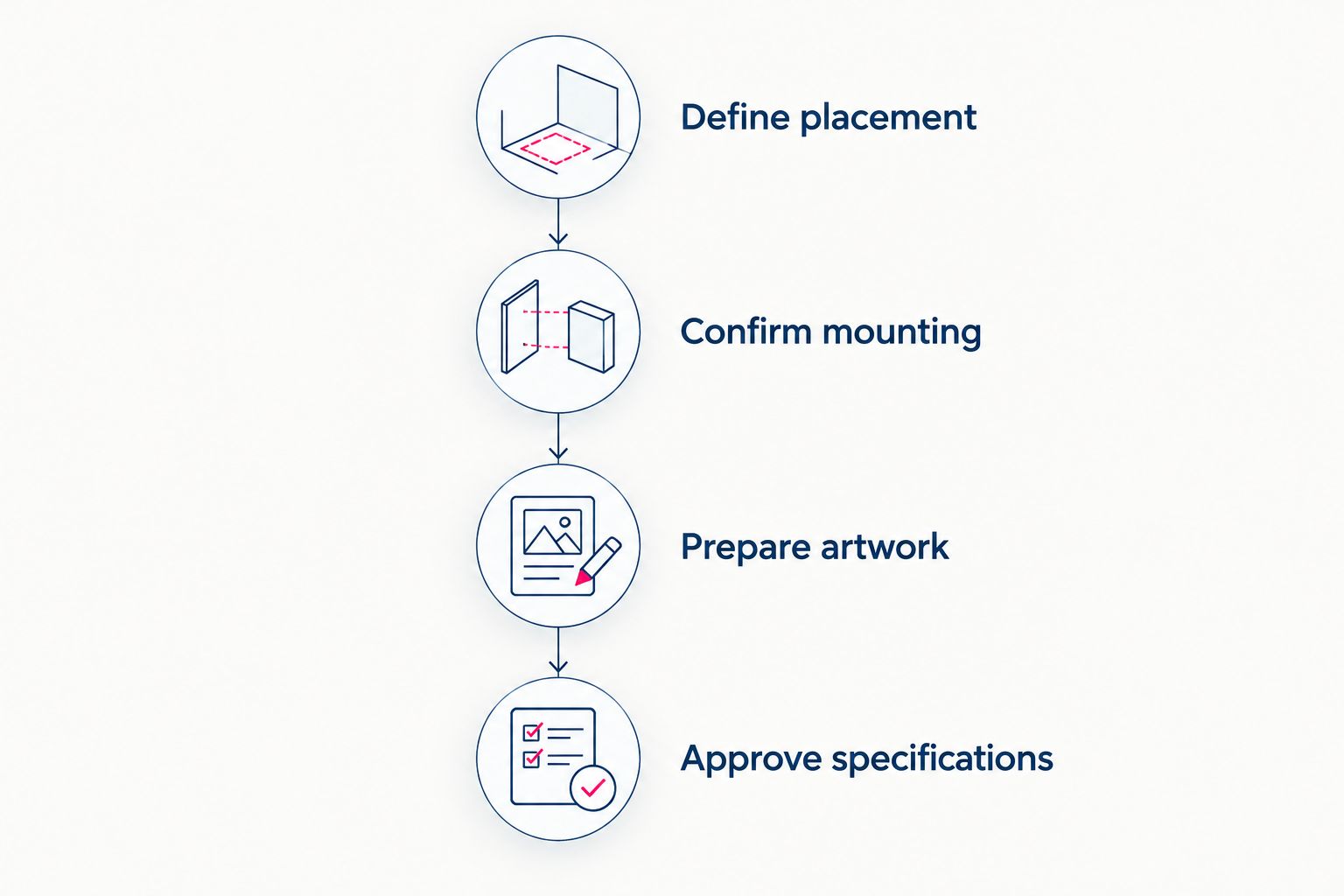
Resolve placement and mounting before approving the production specification.
Once these details are ready, request a printing quote with the required date and delivery destination. Ask for confirmation of the complete project scope before placing the order.
Rush printing available on select products. Contact us to confirm turnaround times based on your project specifications.
How the materials rank
The 2026 ranking follows mounting fit, exposure, reuse, handling and replacement needs. Corrugated plastic takes the default position for temporary stake-mounted signs; ACM moves ahead for reusable framed panels, while solid aluminum serves hanging assemblies.
This is an application-based buying guide, not a product test or a claim that one sheet lasts a fixed number of seasons. The final specification must match the actual sign dimensions, hardware and location.
Which yard sign material should you choose?
Choose corrugated plastic when you need a straightforward temporary yard sign. Choose ACM when the job is a reusable framed listing panel, and solid aluminum when the panel hangs from compatible hardware.
State 48 Print is best for business buyers seeking personal guidance on commercial printing and signage projects. Describe the sign's job first, then request confirmation of the material and assembly that fit it.
FAQ
What's the best yard sign material for real estate agents?
Corrugated plastic is the best default for temporary, stake-mounted real estate yard signs. Aluminum composite material is the stronger fit for reusable framed panels, while solid aluminum suits hanging panels with compatible hardware.
Is aluminum better than corrugated plastic for real estate signs?
Aluminum is better suited to hanging panels, while corrugated plastic fits temporary wire-stake signs. Choose by mounting method and reuse needs rather than treating either material as the winner for every application.
What's the difference between aluminum and aluminum composite signs?
Solid aluminum is metal sheet; aluminum composite material has aluminum faces over a core. Specify the construction explicitly because the same panel dimensions do not make the materials interchangeable.
Can I reuse corrugated plastic open-house signs?
You can reuse corrugated plastic signs that remain readable, undamaged and compatible with their stakes. Inspect the corners, flutes and printed faces before each installation, and store panels flat with protection from abrasion.
Does corrugated plastic work with every wire stake?
No, corrugated plastic and wire stakes must be compatible. Confirm the sheet thickness, flute direction and stake design before approving the sign specification.
Is expanded PVC a good outdoor real estate sign material?
Expanded PVC is not the default choice for exposed real estate lawn signs. Use it only when the specific product grade, support and exposure have been confirmed for the application.
What should I send when requesting a real estate sign quote?
Send dimensions, quantity, placement, mounting details, artwork and the required date. Include hardware measurements and identify whether the sign needs printing on one face or both.
Can State 48 Print rush a real estate sign order?
Rush printing available on select products. Contact us to confirm turnaround times based on your project specifications.
One last thing
Check the arrow on both faces of every directional sign before approval. A readable sign pointing away from the property is still a failed sign. Review the artwork as drivers will encounter it—not just as two pages beside each other on a screen.